

Making a Fantasy Map Like a 16th-Century Atlas
Hugo -
Over the last few weeks, I worked on a map of various game dev techniques for people to refer to and learn from. Like, a real map! With each town being a technique's home, provided with a concise, illustrated example. And here we are. Today we are diving into the making of The Game Dev Atlas.
That's so 1570, bro.
If you want to pull off a cohesive art direction, you need to spend most of your time learning about your reference materials. No C code, no IDE, no sub-agents doing things. Just explore and wander on Google Images (old-school, I know), Wikipedia, and online museum galleries.

Gather things, ideas, and visuals! You should feel the inspiration (literally, as you inspire fresh air) inflating your mind, and the first scraps of decisions starting to flow through your head, like: I want a bit of that, none of that, this thing specifically for that part etc.
That is the whole work: what do you want? It's on you to set the quality bar and how things should be.
If you don't already know, typography conveys most of the design weight. That's just it.
Example: after some research I stumbled on that Luminari font that was a great fit for what I wanted my map to look like. It is a paid font, and there were plenty of free alternatives, but not quite as right as the Luminari font. Instead of saying "that's ok, this free one is the same vibe", I just paid for the font I found just right. Never concede terrain on your instinct!
 Plain
 Mess it up a bit
 Final

Effects · Act I
Procedural VFX
Instead of drawn sprite sheets for your effects, try building VFX via code! For pixel art it is super powerful and once you nail a workflow, it is also super cheap to produce. You can then tweak color, animation parameters, etc.
A real island.
Claude, please generate a procedural terr... 
Just pick an existing, real island. Nowadays we do have precise elevation data for most islands on Earth. If you want a realistic island, well, pick a real one.

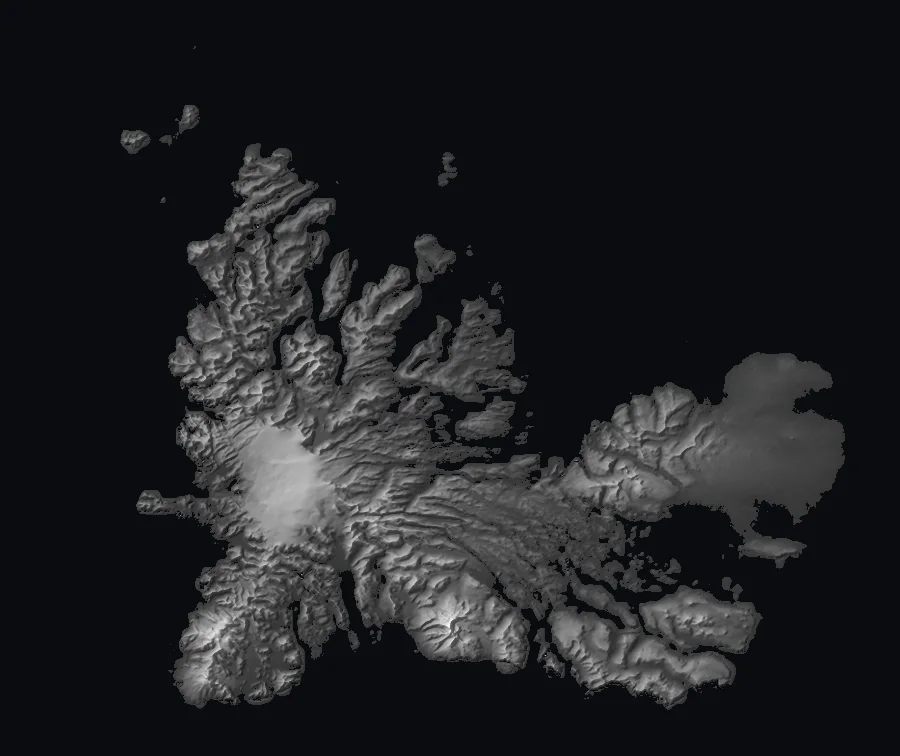
Engraving in real time.


 Engraved Coloured

Some styles and colourings I've tried (click on the tabs to compare):
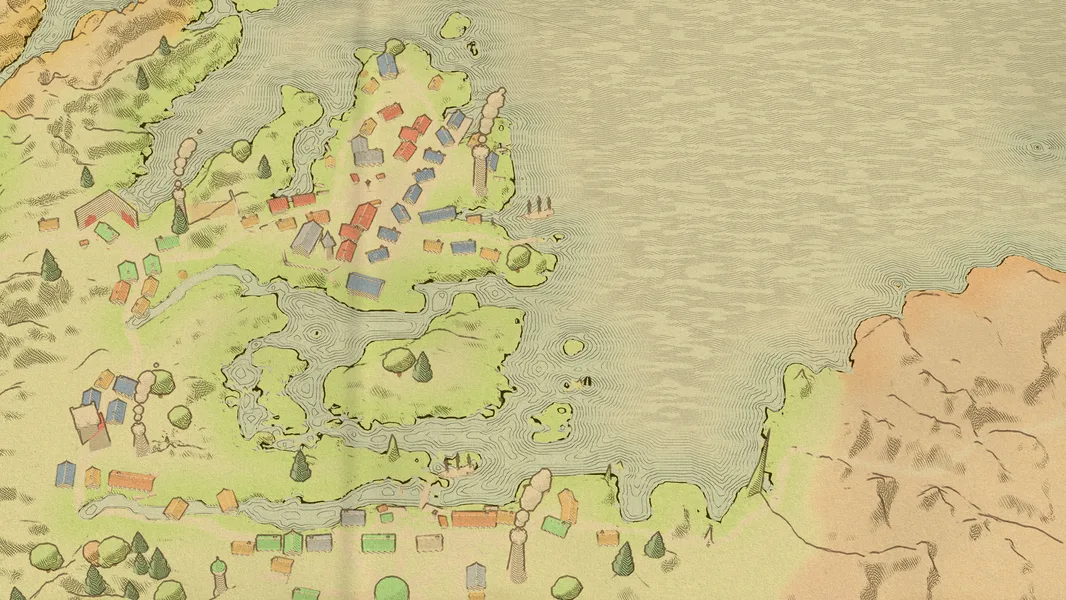
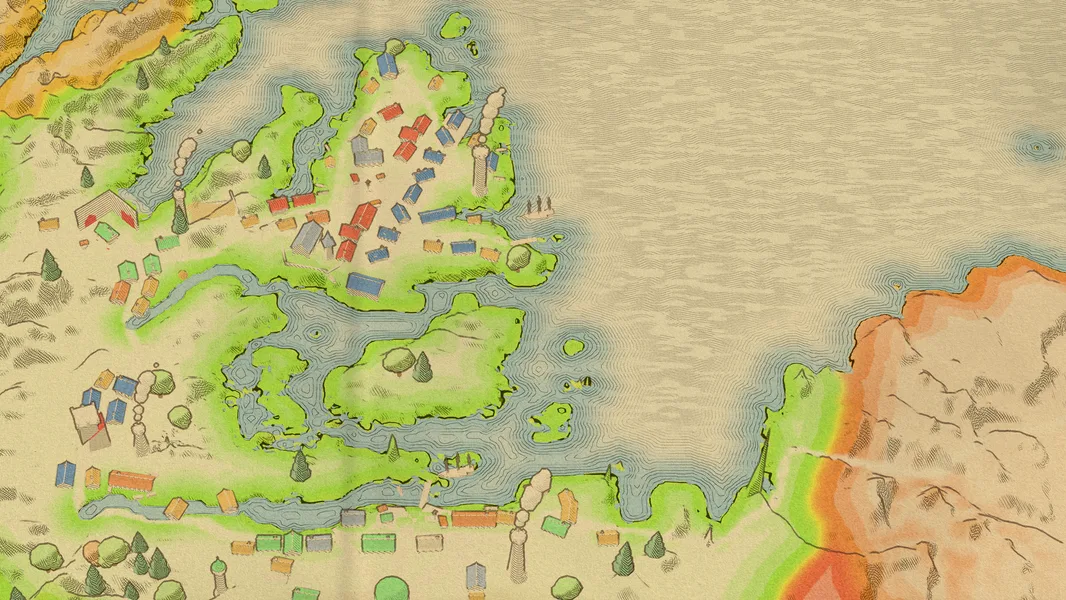
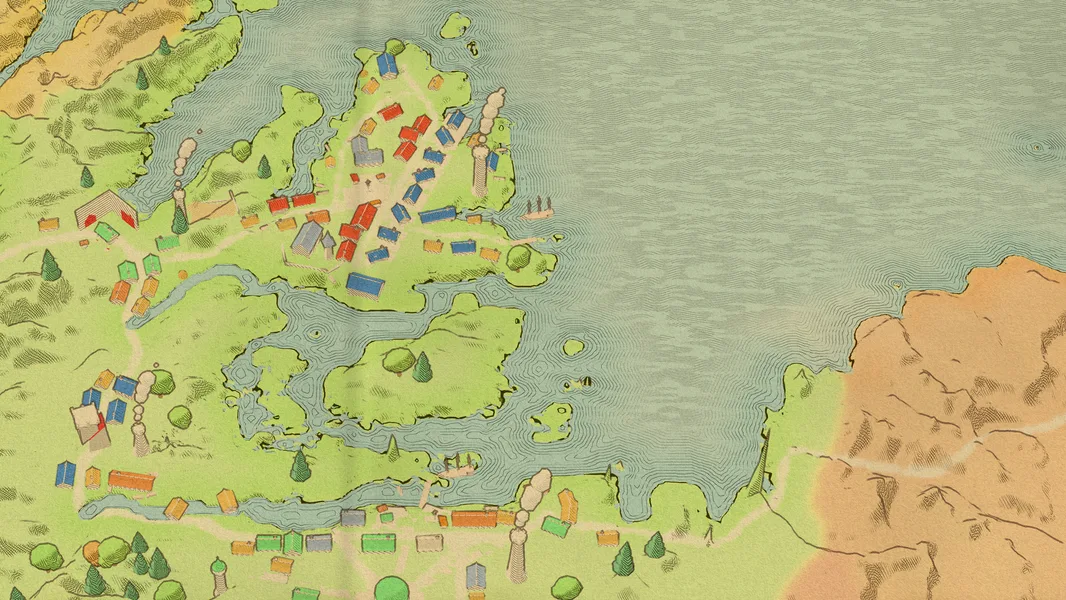
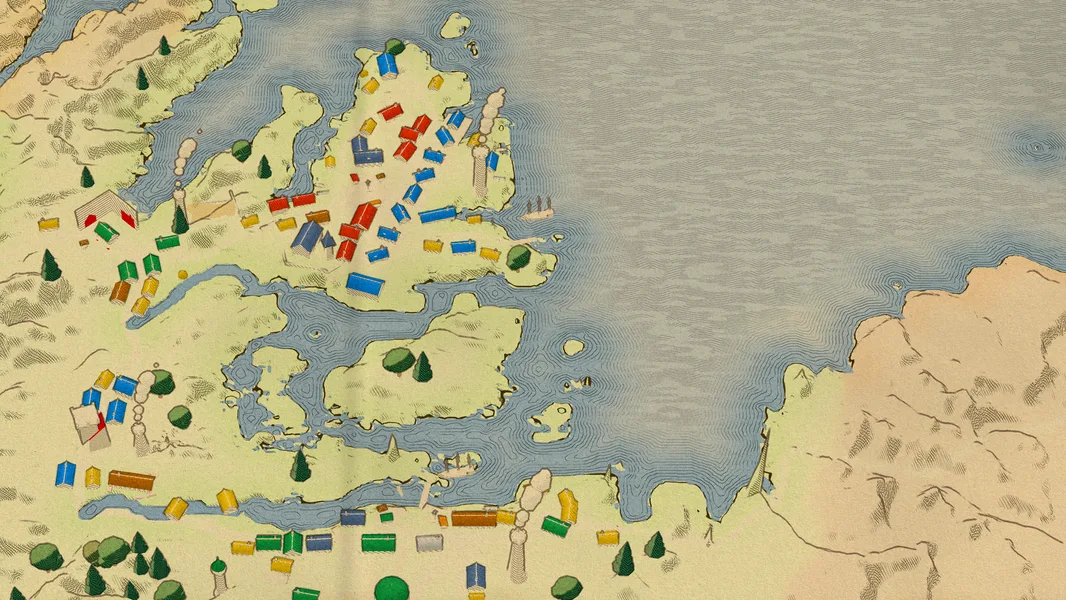
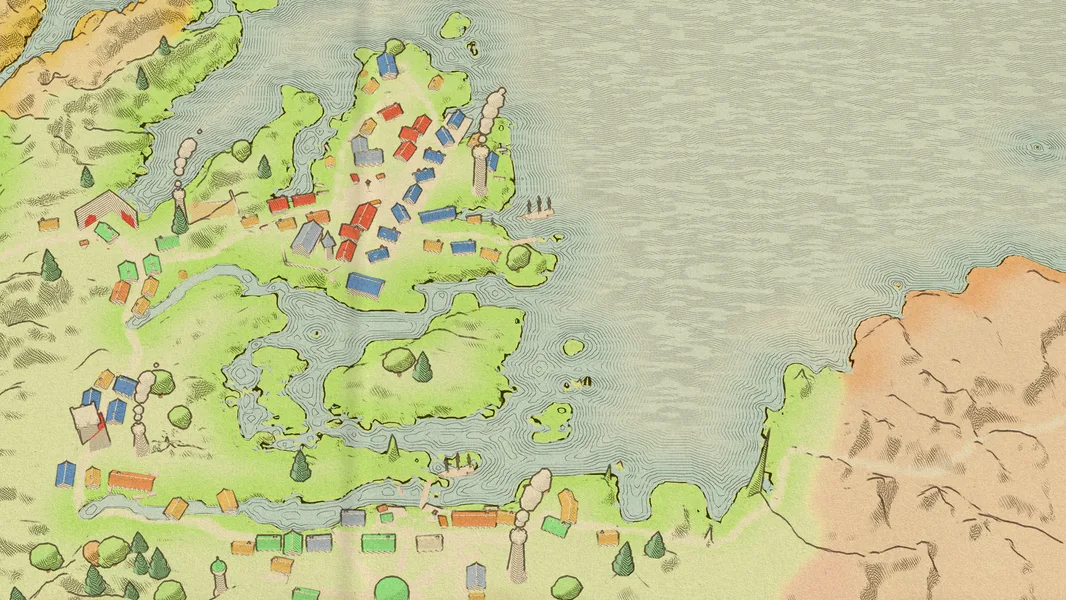
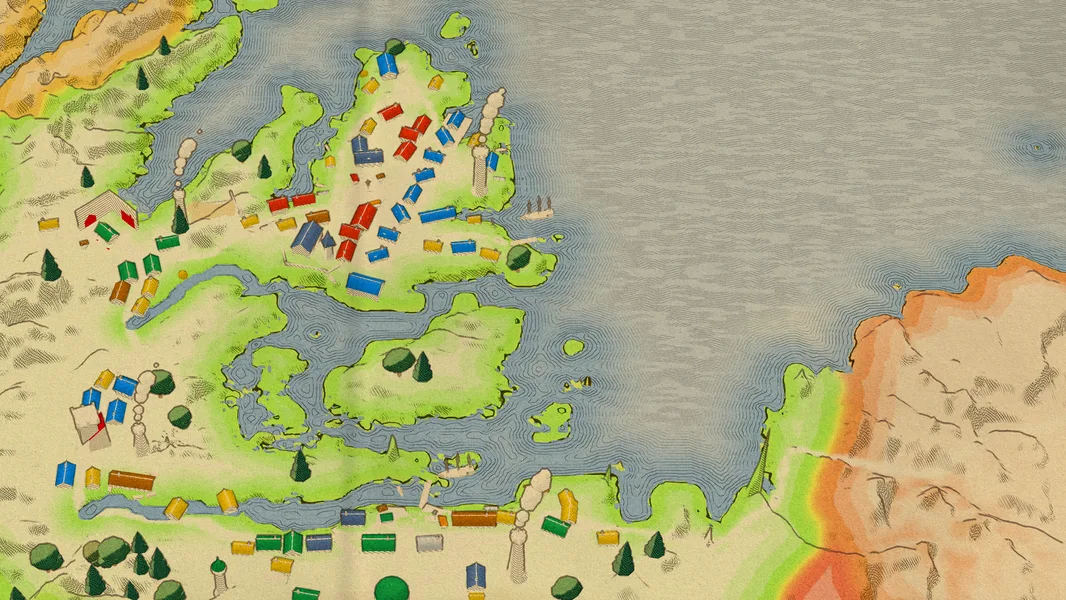
Don't be perfect!
Add some imperfections, color blends, etc. Nothing is perfect in real life, and having an eye for imperfections is what makes things look interesting.

 Boring Just right
Making towns interesting.
The point of the atlas is to showcase game dev techniques, one per town. So I decided two things:
First, I wanted small visual touches on each town's shape reflecting the technique it's about. For instance, the Procedural Legs town shows a crawling house.
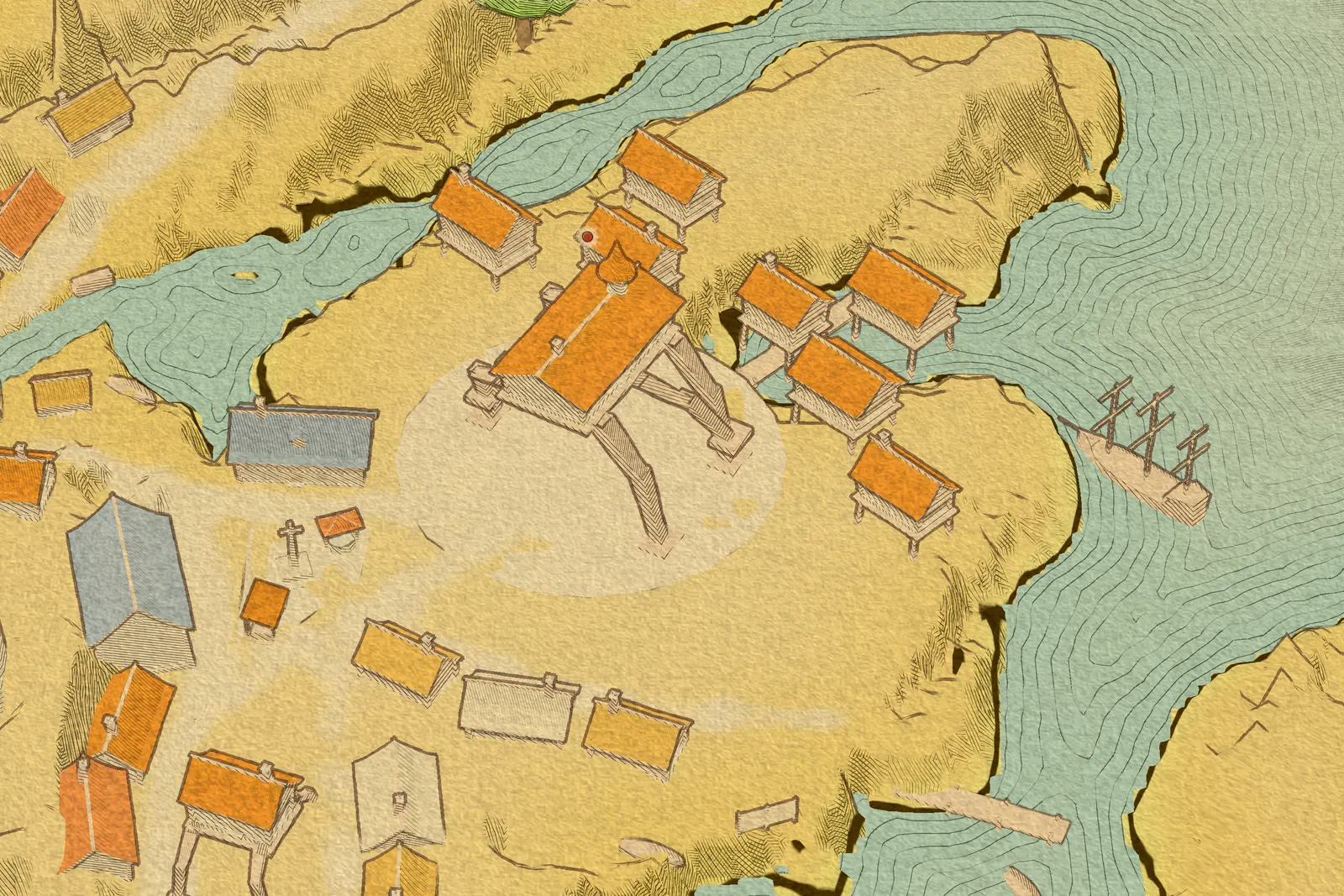
Second, I wanted organic town buildings, so I built a small procedural building system to add diversity to buildings. Risky move: I'm a big fan of Houdini, so I could have thrown away the whole thing, and this blog post would be titled "I'm making Houdini, but running in the browser".
Anyway, here's what my small system can build:
60fps on the web.
The map application itself is written in C using the Kaigen engine as a headless C lib. I'm a Rust guy, but I must admit the compile time freaks me out for game dev with Rust. It took me several iterations to reach smooth 60fps in the browser, especially with the night mode (try it!).
But I'm finally happy with how it runs right now, while I'm still tweaking things atm.

The web app is written in Svelte, because I like Svelte. So the shallow routing and anything UI happen as part of the SvelteKit app.
Conclusion
It was a very fun project! At the end of the day, I love the creative process of making things, shaping ideas like a material, refining details. I strongly believe that when artists leverage AI, y'all will be cooked; because they alone know how to touch the human soul and create the surprise.

The Game Dev Atlas
Acknowledgments and tools used
- Sprite Fusion for the pixel art in the techniques
- Svelte and SvelteKit for the web app
- Luminari by Canada Type for the lettering
- EB Garamond Initials by Georg Duffner (SIL Open Font License) for the illuminated initials
- Kaigen for the engine
- NASA Earth Observatory for the photo of Kerguelen (28 October 2016)
- Terrain Tiles on AWS by Mapzen, and the data sources they name, for Kerguelen's elevation

